Doctor-Led Polynucleotides in Soho
Polynucleotides at Dr Oli Aesthetics in Soho are injections of purified fish DNA that hydrate the skin and boost collagen, used under the eyes, on the face and neck, and for early hair thinning.
- £50 doctor consultation

The short answer
What are polynucleotides?
Polynucleotides are short, purified pieces of fish DNA in a sterile gel. Fish DNA is close enough to human DNA to work in human skin, and it is heavily purified and tested to remove allergens. Once injected, it binds water in the skin, prompts skin cells to make new collagen and elastin, and calms inflammation.
Polynucleotides do not add volume the way filler does, and they work differently from Profhilo. They suit areas where filler is the wrong tool, such as crepey skin under the eyes and fine lines around the mouth, and they are also used for early hair thinning. A course is 3 sessions about 3 weeks apart, then top-ups. Dr Oli offers them at UNTIL Soho and UNTIL Marylebone.
Polynucleotide treatment at a glance
- Skin course3 sessions, 3 weeks apart
- Hair course3 sessions, a month apart
- Treatment time20 to 30 minutes
- DowntimeMild swelling for up to 24 hours
- Top-upsEvery 4 to 6 months
- WhereSoho and Marylebone
- Combines withLaser (Bio-Boost)
Polynucleotide treatments in Soho and Marylebone
Polynucleotides under the eyes
The under-eye area is the most common place for polynucleotides. Dark circles caused by thin, crepey skin, rather than lost volume, often respond better to polynucleotides than to tear trough filler. The course is 3 sessions, 3 weeks apart. Results start to show from the second session and peak 8 to 12 weeks after the third.
Polynucleotides for the face and neck
The same course of 3 sessions is used for fine lines around the mouth, crepey skin around the eyes and a loss of glow on the lower face and neck.
Polynucleotides for hair loss
For pattern hair loss at an early stage, polynucleotides injected into the scalp can wake up resting hair follicles, increase the share of hairs that are growing and thicken each hair. The course is 3 sessions, a month apart, then a top-up every 4 to 6 months. It works best early on, and less well once follicles are fully scarred. It can be combined with prescription hair-loss treatment where that suits you.
Polynucleotides vs Profhilo and filler
Filler adds volume in one place. Profhilo spreads under the skin and boosts collagen across the face. Polynucleotides hydrate the skin and calm inflammation while boosting new collagen. They work in different ways, so many people combine all three over time: filler for structure, Profhilo for skin quality on the face, and polynucleotides under the eyes and in other delicate areas.
Polynucleotides can help to:
Improve crepey skin under the eyes
Dark circles caused by thin, crepey skin often respond better to polynucleotides than to filler. The skin is hydrated and prompted to make new collagen.
Soften fine lines around the mouth
The same course is used for fine lines around the mouth, where filler can be too heavy.
Bring back glow to the face and neck
Polynucleotides are used for dull, tired skin on the lower face and neck, as a course of 3 sessions.
Calm and hydrate the skin
They bind water in the skin and calm inflammation, which is why they suit delicate areas.
Support early hair thinning
Injected into the scalp, they can wake up resting hair follicles and thicken each hair. They work best at an early stage of hair loss.
Polynucleotides from consultation to aftercare
Every polynucleotide course starts with a consultation, because thin skin and lost volume need different treatments. Dr Oli checks your skin or scalp, takes photos to track your progress and confirms your plan and price.
Consultation.
Dr Oli looks at your skin or scalp, decides whether polynucleotides are the right tool and takes photos at the start, so your progress can be measured.
Preparation.
Avoid ibuprofen, aspirin, vitamin E, fish oil and alcohol for 24 to 48 hours before, and stop retinoid creams on the area 48 hours before. Come without makeup. For hair treatment, wash your hair that morning.
Treatment.
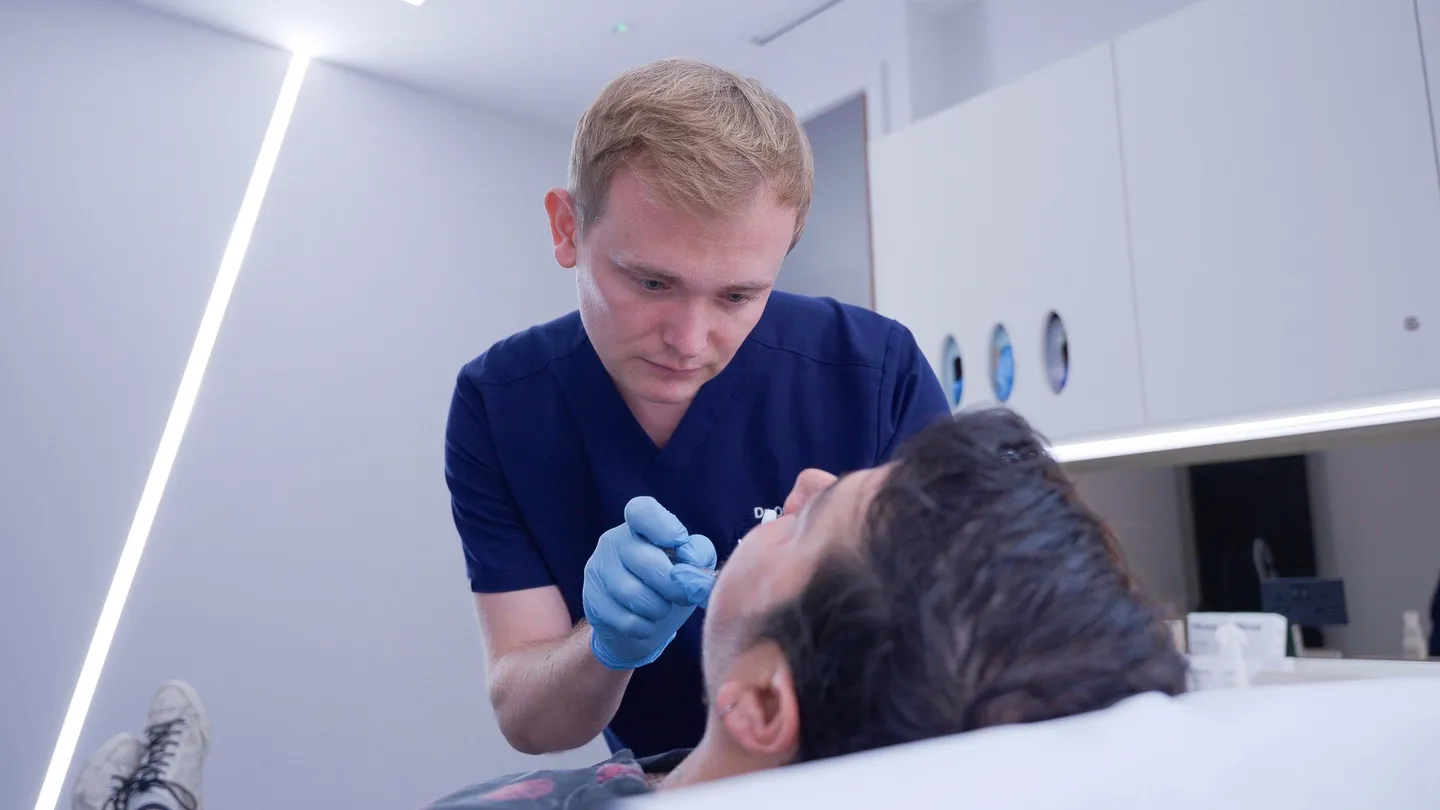
Numbing cream goes on for 15 minutes first. Each injection feels like a small pinch, and the scalp is treated with a finer needle. A session takes 20 to 30 minutes.
Aftercare.
Avoid pressure, massage and makeup on the area for 12 hours, or shampoo after scalp treatment. Skip saunas, steam rooms, hard exercise and alcohol for 24 hours.
Course and upkeep.
For skin, the course is 3 sessions, 3 weeks apart. For hair, it is 3 sessions, a month apart. After that, a top-up every 4 to 6 months keeps the effect going.
What polynucleotides can treat
Polynucleotides improve the quality of skin and support hair growth. Your consultation decides whether they suit your concern.
- Dark circles and crepey skin under the eyes
- Fine lines around the mouth
- Dull or loose skin on the face and neck
- Early pattern hair loss
Treatment areas
Face
Body
Hair
Boundaries of practice
What's not treated
Good practice means saying no when indicated:
- Pregnancy or breastfeeding
- A skin infection or autoimmune flare where the injections would go
- A known fish or seafood allergy (a theoretical risk, assessed at consultation)
- Scalp inflammation such as folliculitis or severe seborrhoeic dermatitis, for hair treatment
- A strong energy-based treatment on the same area in the last 2 weeks
- A bleeding disorder, or blood thinners without clearance from your doctor
Polynucleotide treatment cost in Soho, London
At Dr Oli Aesthetics in Soho, a polynucleotide skin course of three sessions, three weeks apart, costs £750, and a three-session hair course costs £1,000.
Skin
Hair
Written and medically reviewed by Dr Oli Curwen, Aesthetic Doctor: MBBS BSc MRCS · MHRA: polynucleotide injectables are CE-marked Class III medical devices.
FAQ
Polynucleotide treatment FAQs
How long until I see results from polynucleotides?
At Dr Oli Aesthetics, skin results from polynucleotides usually start to show after the second session, around week 3, and peak 8 to 12 weeks after the third. Hair changes more slowly, with visible improvement from month 3 or 4 and a peak at 6 to 9 months. Photos at every visit track your progress.
Do polynucleotides hurt?
Polynucleotides at Dr Oli Aesthetics feel like a small pinch at each injection point, and numbing cream goes on for 15 minutes first. The scalp is more sensitive, so Dr Oli uses a finer needle and injects slowly, and most people rate it 3 to 5 out of 10. Each session takes 20 to 30 minutes.
How do polynucleotides differ from PRP?
Both are regenerative injections, but PRP uses your own blood, so it varies from person to person. The polynucleotides used at Dr Oli Aesthetics are a standard, MHRA-compliant product that gives the same dose every session. PRP is biologically rich but variable, while polynucleotides are more predictable, which many clinicians prefer for hair.
Do polynucleotides have side effects?
Yes, but side effects of polynucleotides at Dr Oli Aesthetics are usually mild. A small bruise appears in a minority of treatments and clears in 3 to 5 days, there can be mild swelling for 24 hours, and the scalp may feel tender for a short time. Rarely, a small red lump settles over 1 to 2 weeks.
How often do I need polynucleotide top-ups?
Most patients at Dr Oli Aesthetics have a single polynucleotide booster every 4 to 6 months, for both skin and hair, to keep the effect topped up. Some people also use polynucleotides alongside their skincare or a prescribed hair-loss routine, and find they can go longer between sessions.
Can I combine polynucleotides with other treatments?
Yes. At Dr Oli Aesthetics, polynucleotides are often combined with hyaluronic acid filler, Profhilo and anti-wrinkle injections, because each works differently. Laser can share the appointment as Bio-Boost, while microneedling needs 2 weeks either side. The most common pairing is polynucleotides under the eyes with tear trough filler at a separate appointment.
Related Treatments

Get Started
Ready to begin?
Book today.
Dr Oli Aesthetics • 111 Charing Cross Road, UNTIL Soho, London WC2H 0DT
Book NowAppointments typically available within 1–2 weeks